It's four o'clock and you can't decide what to have for dinner. Not because dinner is hard. Because you've already made two hundred calls today, and half of them weren't yours to make.
Which graphic goes on the post. Whether the invoice goes out Tuesday or Wednesday. What your assistant should say to the client who emailed twice. By the time the decision that could actually grow your business shows up, you've got nothing left. So it waits. Again.
That isn't a time problem, and it isn't a willpower problem. Wedding planner Kate Turner sees it in almost every couple she works with, and the pattern looks exactly the same in a business. Her answer is surprisingly simple: figure out the handful of decisions that are truly yours, and trust the people you hired with the rest.
Listen to the episode · Watch on YouTube
About this episode
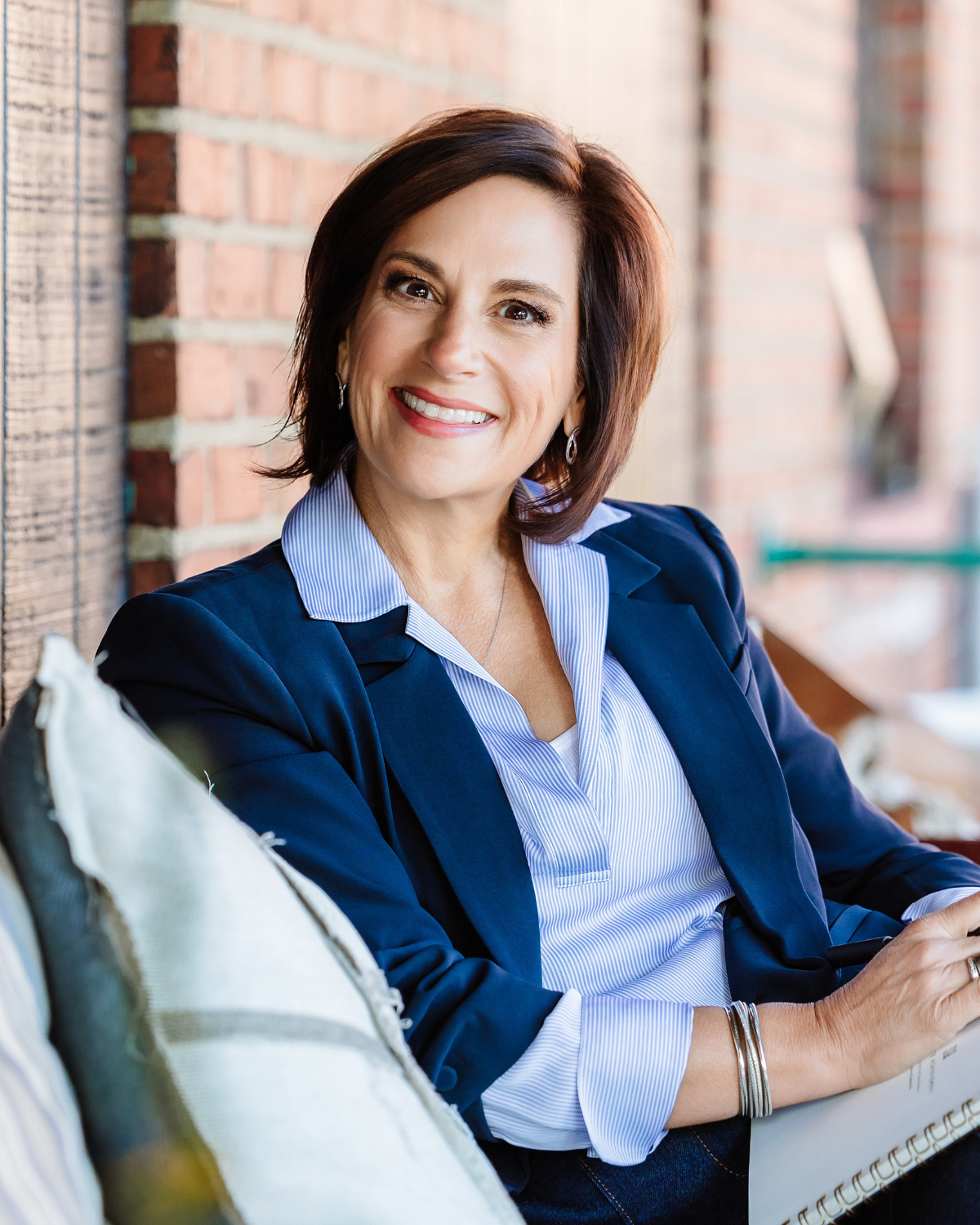
Kate Turner is the founder and creative director of Kate & Co. Events, a luxury wedding planning firm based in the Midwest whose work has appeared in Vogue and Martha Stewart Weddings. She also owns Marinelle Event Co., a production company that builds custom event installations, and co-founded Landlocked Luxury, an education platform and conference for wedding professionals. She's a mom of three young boys.
In this conversation, Andrea Liebross and Kate compare notes on planning a wedding, running a business, and raising kids. They talk about why so many capable people get stuck deciding everything, how Kate gets clients to say what really matters, and why she has given up on work-life balance for good.
What is decision fatigue, and why is it a leadership problem?
Decision fatigue is the drained, foggy feeling that comes from making too many choices in a row. For business owners it's a leadership problem, not a willpower problem. Capable women get overwhelmed because they try to make every decision instead of the few that actually move the business forward.
Andrea sees this in her clients constantly. They're successful and smart, which is exactly why they end up holding everything. The shift isn't deciding faster. It's deciding which decisions belong to you, so your best thinking goes to the choices that change where the business is headed.
How many decisions should a business owner actually be making?
Far fewer than you're making now. Kate Turner estimates a wedding involves 356 to 400 decisions, yet she only needs her couples to make about ten. The same math applies to a business: a small set of choices belongs to you, and the rest belongs to the people you've hired.
Kate is clear that some calls are only the couple's. She can't tell them how many bridesmaids to have or whether the ballroom beats the tent. But the photo spot, the stationery layout, the shade of the napkins? That's what her team is for. If you've hired well, Kate says, let them carry out the vision you've already shared.
How do you prioritize when everything feels important?
Force a ranking. Kate's team gives couples ten statements and asks them to rank each one from one to ten, using no number twice. Nothing can tie for first. Later, when a small choice starts to feel huge, they point back to that ranking and remind clients of their own priorities.
They pair it with a second tool: a grid that describes each category, like florals or stationery, at a modest and a more generous level. Clients don't know which is which, but Kate's team does. When a couple agonizes over forks, Kate can remind them they chose a big bar installation over custom place settings, and that's where everyone's eyes will go.
Why can't I let go of decisions I've already paid someone else to make?
Usually it isn't about the decision. When you can't let go, Kate suggests asking why you don't trust the person you hired. Sometimes it's control. More often, as Andrea puts it, the real problem is a feeling you want to avoid, like the uncertainty of not knowing whether this is the best choice.
Andrea teaches this through TRUST, the acronym from her book She Thinks Big, where the R stands for real problem. Kate adds a twist: many of her couples grew up online and believe a few hours of scrolling makes them experts. This year alone she took over five weddings from planners who were fired, mostly because couples chose on price and a pretty website instead of fit.
What's the difference between having a vision and executing it?
Vision is the picture of what you want. Execution is understanding the time, labor, and cost it takes to get there. Kate sees plenty of people who can dream a beautiful wedding, and Andrea sees the same in business: most owners don't lack vision, they lack the structure to carry it out.
Kate's team can spend 500 hours planning a single wedding, and close to 3,000 on a large build. That's the part nobody sees on Instagram. Andrea calls it the infrastructure under the vision, and it's what separates an idea from a result.
Why should you plan for how people feel before how things look?
Because people remember how they felt, not what they saw. Kate starts every event with hospitality: a good meal, a long open bar, and enough space for guests to be comfortable. With the right budget, any room can look beautiful. If guests are uncomfortable, that's all they'll remember.
Andrea uses the same idea with her clients. Instead of starting a planning session with results, she asks which three to five feelings they felt most in the last six months, and which ones they want next. She also suggests a question Kate plans to add to her own onboarding: if there were no photos and no video, what would you want to remember?
Is work-life balance realistic for women who run businesses?
Not as a goal. Kate says if you're aiming for work-life balance, it isn't going to happen, and mom guilt won't disappear either. What works instead is boundaries, transparency, and clear communication with clients. Andrea calls it work-life integration: doing both in a way that feels good.
Kate's clients know she's a mom first. She'll tell a client she's in mom mode and will reply by 9:30 the next morning, and the right clients respect that. Her sister's version: you only have ten marbles. Some days it's five and five, some days it's eight and two. Choosing clients who share your values is what makes that possible.
Quotes from the episode
"Ideally, I need you to make ten decisions for your wedding, and I can do the rest." (Kate Turner)
"How you make somebody feel is far more important than what you are saying." (Kate Turner)
"You have to start with the hospitality part of it first, not the look." (Kate Turner)
"Decision fatigue is really a leadership problem." (Andrea Liebross)
Resources mentioned
Kate & Co. Events · Instagram @kateandcompany · TikTok @kateandcompany
Marinelle Event Co.: Marinelle on Instagram
Don't just listen, implement it
Take fifteen minutes this week. List every decision you made last week, then circle the ten only you could have made. Next to everything else, write the name of who should own it. Anywhere you hesitate, ask what the real problem is.
If you're making all 400 yourself right now, you don't have to keep doing it alone. Join Andrea's next live workshop, where you'll put this to work in your own business and get coached by Andrea live. Register for the workshop.
Connect with Andrea
Andrea's links has everything, including workshop registration. The She Thinks Big book · Website · More episodes